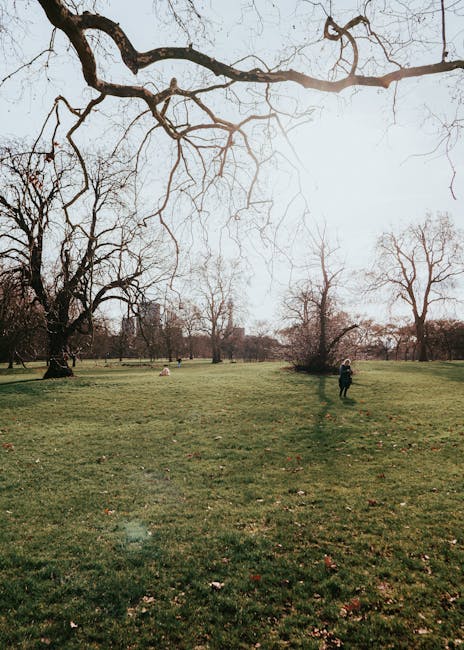
Regents Park tree pruning rules for St Johns Wood gardeners
If you garden in St John's Wood, tree work can feel oddly complicated for something that starts with a pair of secateurs and a ladder. One minute you are just trying to tidy a canopy, the next you are wondering about conservation constraints, bird nesting, shared boundaries, or whether a light prune has turned into something that needs proper permission. That is exactly why understanding the Regents Park tree pruning rules for St Johns Wood gardeners matters. It helps you make cleaner decisions, avoid awkward mistakes, and keep work sensible, safe, and respectful of the local landscape.
In practical terms, this guide explains how pruning decisions are usually made around Regents Park and nearby St John's Wood properties, what gardeners should check before cutting, where the risks sit, and how to plan work without creating problems later. To be fair, most tree issues are not dramatic. They are small, repetitive, and easy to get wrong. A branch trimmed at the wrong time can stress the tree. A rushed cut can spoil shape. And a little too much confidence can make a neatly kept garden look, well, surprisingly clumsy by the weekend.
We will cover what matters, how the process works, when pruning makes sense, what best practice looks like, and how to spot the jobs that should be handled with extra care. If you are also planning broader outdoor work, it may help to look at garden maintenance, hedge trimming, or even tree lopping and removal where the situation calls for more than routine pruning.
Table of Contents
- Why Regents Park tree pruning rules matter
- How the pruning rules work in practice
- Key benefits and practical advantages
- Who this is for and when it makes sense
- Step-by-step guidance
- Expert tips for better results
- Common mistakes to avoid
- Tools, resources and recommendations
- Law, compliance, standards and best practice
- Options, methods and comparison
- Case study or real-world example
- Practical checklist
- Conclusion
- Frequently asked questions
Why Regents Park tree pruning rules for St Johns Wood gardeners Matters
Tree pruning is never just about appearance. In a place like St John's Wood, where mature trees, formal gardens, and closely spaced properties often sit side by side, pruning has knock-on effects. It can influence light, privacy, tree health, safety, and even neighbour relations. That is the real reason the rules matter: they help you avoid turning a routine garden task into a dispute or a tree-health problem.
There is also the wider setting to think about. Trees around Regents Park and the surrounding streets often contribute to the character of the area. A heavy-handed cut can look out of place very quickly. And once a tree has been over-pruned, it can take years to recover its shape. Sometimes it never really does. You notice that most in spring, when the new growth comes back thin and uneven, and the tree looks like it is trying to repair a bad haircut. Nobody wants that.
For St John's Wood gardeners, the practical value is simple: rules reduce guesswork. They help you decide whether the job is routine maintenance, a sensitive prune, or something that needs a qualified tree specialist. They also give you a sensible framework for timing the work, protecting wildlife, and documenting decisions if anyone asks questions later.
Practical summary: If a pruning job might affect a mature tree's structure, health, neighbours, or local character, slow down and check the context first. A little caution now usually saves time, money, and stress later.
How Regents Park tree pruning rules for St Johns Wood gardeners Works
When people talk about tree pruning rules, they often mean a mixture of legal duties, conservation expectations, good horticultural practice, and common-sense safety. The exact detail depends on the tree, the site, and who owns or manages it, but the logic is fairly consistent.
First, you identify what kind of tree you are dealing with. Is it a young ornamental tree in a private garden, a mature street-facing tree, or a boundary tree shared with a neighbour? That matters because the level of care and formality changes quickly. A small shaping prune is one thing. Removing substantial limbs is another entirely.
Second, you check whether the tree is subject to any special protection or site-specific constraints. In the Regents Park and St John's Wood area, that can include conservation sensitivity, nearby protected landscapes, tree preservation considerations, or site management rules. You do not need to panic about every branch, but you do need to ask the right questions before the first cut.
Third, you decide whether the pruning is seasonal, corrective, or structural. Seasonal pruning keeps growth tidy. Corrective pruning addresses damage, crossing branches, or deadwood. Structural pruning helps the tree develop a better form over time. The method you choose should match the tree's age, species, and condition. It sounds obvious, but a lot of poor results come from using the same approach for everything.
Finally, you carry out the work carefully and proportionately. That means clean cuts, sensible reduction, no unnecessary stripping of foliage, and an eye on aftercare. If you are not sure a branch removal is minor, treat it as more serious until proven otherwise. Trees are resilient, yes, but they are not indestructible.
For larger or riskier jobs, many gardeners prefer to bring in professionals who understand both garden presentation and arboricultural care. That is where services like services overview and garden clearance can be useful when pruning is part of a bigger tidy-up rather than a standalone cut.
Key Benefits and Practical Advantages
Following the right pruning rules is not about being fussy. It gives you better results in ways you can see almost immediately, and a few benefits only become obvious over time.
- Better tree health: Correct pruning reduces stress and helps trees recover more cleanly.
- Safer gardens: Dead, weak, or overextended branches are less likely to fail in wind or heavy rain.
- Cleaner appearance: Balanced pruning keeps trees looking intentional rather than hacked back.
- Improved light: A light, well-timed prune can lift shade without leaving the canopy bare.
- Reduced neighbour friction: Thoughtful pruning is less likely to trigger complaints about privacy, overhang, or mess.
- Long-term savings: Good decisions now often prevent bigger, more expensive remedial work later.
One thing people often underestimate is how much difference a modest prune can make to a garden's atmosphere. A few well-chosen cuts can let afternoon light reach a patio, brighten a lawn, and make the whole space feel less enclosed. You feel it as much as you see it. On a grey London afternoon, that matters more than most people admit.
There is also a commercial advantage for anyone maintaining rental properties, managed gardens, or high-value homes. A neat canopy signals care. A neglected canopy suggests the opposite, even if the rest of the garden is immaculate. Fair or not, people read the garden quickly.
Who This Is For and When It Makes Sense
This topic is most relevant if you manage trees in or near St John's Wood and want to stay on the right side of both horticultural sense and local expectations. It is not just for professional gardeners, either.
- Homeowners who want to improve light, shape, and safety without damaging mature trees.
- Landlords and letting agents who need the garden to look presentable and compliant.
- Gardeners and maintenance teams who want a practical framework before carrying out tree work.
- Residents with boundary trees who need to handle overhanging growth carefully.
- Anyone near Regents Park where tree character and visual impact matter more than usual.
It makes sense to pause and review the rules before pruning if the tree is mature, visibly healthy but large, clearly part of the local streetscape, or located where public views matter. It also makes sense if the work is being done just because the tree "looks a bit big." That is the moment to step back. A tree being large is not the same as a tree needing a heavy prune.
If the job is mostly about keeping hedges or structural planting under control, a combination of hedge trimming and routine garden maintenance may be more appropriate than treating everything as tree surgery.
Step-by-Step Guidance
Here is a practical way to approach pruning in the Regents Park and St John's Wood context. It keeps the job calm and structured, which is useful because tree work gets messy very quickly if nobody has a plan.
- Identify the tree and its condition. Check species, age, vitality, recent damage, and whether branches are dead, crossing, diseased, or obstructing a path.
- Assess the setting. Look at proximity to neighbours, roads, roofs, walls, power lines, and any visible conservation or managed-landscape sensitivities.
- Decide the purpose. Are you improving shape, removing deadwood, lifting canopy, reducing weight, or simply tidying growth? The purpose drives the method.
- Check for restrictions. If there is any doubt about protection, ownership, or site rules, stop and verify before cutting. Guessing is a bad strategy here.
- Choose the right timing. Prune when the species and objective allow it, and avoid unnecessary disturbance during periods when wildlife may be active.
- Use proper cuts. Cut cleanly, avoid tearing bark, and do not leave stubs unless a specific arboricultural reason exists.
- Remove only what is needed. Good pruning is selective. If it feels like too much, it probably is.
- Clear up and inspect. Remove arisings, check the tree from a few angles, and look for anything you missed.
- Monitor aftercare. Watch for stress, dieback, or unusual regrowth over the following weeks.
A quick real-world point: many gardeners find the hardest part is not the cutting, it is stopping. Once a branch is down, it can be tempting to "just take one more." That's usually how tidy intentions slide into over-pruning. Slow is often better. Boring, maybe. But better.
Expert Tips for Better Results
Good pruning looks simple from a distance because the best work is subtle. Up close, there is a lot going on. These are the habits that usually separate a decent result from a really solid one.
- Prune for structure, not just shape. A tree should still look like itself afterwards.
- Keep the canopy balanced. Removing growth from only one side can create awkward lean and stress.
- Respect the natural habit of the species. Some trees tolerate shaping better than others.
- Make the least invasive cut that solves the issue. This is often the best professional instinct.
- Work with the season, not against it. Timing affects recovery more than many people expect.
- Step back often. Every few cuts, take a look from the path, lawn, and window line.
One useful habit is to photograph the tree before and after. Not for show, just for memory. A garden can trick your eye, especially if you have been staring at the same branches for half an hour. By the end, everything starts to look a bit negotiable. The photos bring you back down to earth.
If the tree sits within a larger redesign, you may also want to think about the surrounding layout. A prune that opens up a seating area might pair neatly with landscaping or landscape gardening so the whole space feels planned, not piecemeal.
Common Mistakes to Avoid
Most tree pruning problems come from a few predictable mistakes. They are easy to make, especially if you are working quickly or trying to "fix" a tree in one go.
- Over-pruning: Taking too much foliage weakens the tree and can trigger poor regrowth.
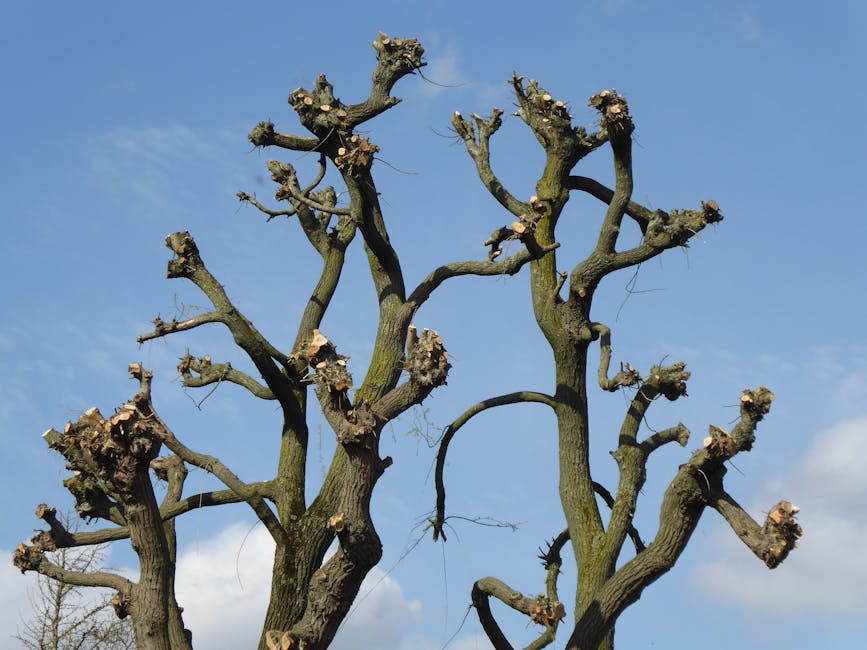
- Topping: Cutting main branches back to stubs is usually damaging and visually harsh.
- Poor timing: Pruning at the wrong time can stress the tree or interfere with seasonal growth.
- Ignoring the setting: Neighbouring properties, wildlife, and access routes all matter.
- Using blunt or unsuitable tools: Ragged cuts heal badly and increase infection risk.
- Assuming all trees respond the same way: They absolutely do not.
There is a softer mistake too: treating tree care as if it were just another garden task. It is not quite. You can mow a lawn badly and recover next week. Trees are slower, more expensive to put right, and much more public in how they fail. That is why people who care about good gardens tend to be careful here.
If the tree is beyond simple maintenance, or if there is obvious instability, decay, or storm damage, it is usually better to seek specialist help than to keep trimming and hoping for the best.
Tools, Resources and Recommendations
You do not need a van full of kit to make good pruning decisions, but the right tools and support make a huge difference. The goal is control, not brute force.
| Need | Best approach | Why it helps |
|---|---|---|
| Light shaping | Hand pruners or small saws | Allows precise cuts with less disturbance |
| Deadwood or minor correction | Careful selective pruning | Keeps the tree natural while improving safety |
| Dense or awkward canopy | Planned reduction by a competent gardener or arborist | Reduces risk of poor shape and unnecessary damage |
| Large or complex tree work | Professional assessment first | Helps avoid structural or compliance mistakes |
For broader support, it can help to look at a service provider's working standards as well as its gardening capability. Pages such as insurance and safety, health and safety policy, and recycling and sustainability give you a sense of how seriously a team approaches the practical side of the work.
If you are comparing options for a garden that needs multiple jobs in one visit, a general services overview can help you see whether pruning should be booked on its own or alongside maintenance, clearance, or mowing. And yes, the lawn often reminds you of the tree work the moment the branches stop stealing light.
Law, Compliance, Standards, or Best Practice
This is the section where people often want a neat yes-or-no answer, but tree care does not usually work that way. The responsible approach is to treat compliance as a set of checks, not a single box-tick.
In areas around Regents Park and St John's Wood, gardeners should be alert to conservation sensitivity, tree protection considerations, property boundaries, and wildlife disturbance. The exact position can vary, so it is sensible to confirm local obligations before significant work starts. If there is any doubt about whether a tree is protected or whether the pruning is substantial enough to matter, pause and verify rather than assuming it is fine.
Best practice usually means:
- using proportionate pruning rather than drastic cutting,
- avoiding unnecessary disturbance during active nesting periods,
- respecting shared boundaries and neighbour access,
- keeping evidence of what was done and why,
- working within accepted arboricultural practice for the species and size of tree.
There is also a common-sense duty of care. If a branch is overhanging a path, threatening a roof, or visibly damaged, it should be handled in a way that prioritises safety without forgetting the tree's long-term condition. The safest-looking option is not always the best one. Sometimes the neatest cut is the one that leaves the tree healthy enough to respond properly.
For complex cases, it is worth separating garden care from tree management. A tidy bed, a clipped hedge, and a pruned tree are related, but they are not the same skill. A good team understands that difference.
Options, Methods, or Comparison Table
Different pruning methods suit different situations. Here is a straightforward comparison to help you choose the right level of intervention.
| Method | Best for | Main advantage | Watch out for |
|---|---|---|---|
| Light formative pruning | Young or developing trees | Encourages strong structure early | Doing too much too soon |
| Selective maintenance pruning | Established trees | Removes dead, crossing, or awkward branches cleanly | Missing hidden defects |
| Canopy reduction | When size needs moderating | Reduces spread while keeping a live canopy | Over-reducing or distorting shape |
| Removal or major surgery | Unsafe, failing, or unsuitable trees | Solves serious risk issues | Needs greater care, planning, and often specialist input |
For many St John's Wood gardens, the right answer is actually a mix: a light prune here, hedge refinement there, and maybe a bit of clearance around the base so the space breathes again. Simple, but not simplistic.
Case Study or Real-World Example
Here is a realistic example based on the kind of situation gardeners in this area often face.
A homeowner near Regents Park has a mature ornamental tree in a front garden. It is healthy, but the lower branches are shading a path and brushing the edge of a boundary fence. The first instinct is to cut it back hard for more light. That would be a mistake. Instead, the right approach is to inspect the tree's condition, remove a few low or rubbing branches, and make only enough reduction to improve clearance and light without stripping the canopy.
The result is usually better all round. The path feels more open, the fence is no longer being scraped, and the tree still looks like a tree rather than a thin skeleton. The neighbours are happier too, because the garden remains attractive rather than obviously "worked on."
A second part of the same project might involve tidying the surrounding planting, clearing away fallen material, and checking whether the grass edge needs attention. That is where services such as lawn mowing and garden clearance fit naturally into a broader maintenance visit.
It sounds unglamorous, but that's often what good garden work looks like: not dramatic, just quietly correct.
Practical Checklist
Use this checklist before pruning any tree in the Regents Park and St John's Wood area.
- Have you identified the tree species and general condition?
- Do you know whether the tree is mature, boundary-related, or visually sensitive?
- Have you checked whether any special protection or site rule may apply?
- Are you clear on the reason for pruning?
- Is the chosen timing suitable for the tree and the setting?
- Have you thought about wildlife, neighbours, and access?
- Are your cuts likely to be selective rather than excessive?
- Do you have the right tools and enough room to work safely?
- Will the finished tree still look balanced and natural?
- Have you planned for tidy-up and aftercare?
If you tick most of those boxes, you are usually on solid ground. If a few of them are unknown, that is not a failure. It just means you should slow down and get more information before you start cutting. Trees forgive a lot, but not everything.
Get a free quote today and see how much you can save.
Conclusion
The main lesson from Regents Park tree pruning rules for St Johns Wood gardeners is straightforward: good pruning is as much about judgement as it is about tools. The best work protects the tree, respects the setting, and leaves the garden looking calmer, lighter, and more intentional. The worst work is usually rushed, heavy-handed, or based on guesswork.
If you remember only one thing, make it this: prune with a purpose, not with impulse. Check the tree, check the context, and choose the least disruptive option that actually solves the problem. That approach tends to work beautifully in this part of London, where gardens are often close, visible, and valued for their character as much as their convenience.
And honestly, that is part of the pleasure of it. A well-tended tree does not shout. It just sits there, steady and elegant, making the whole street feel a bit better.
Frequently Asked Questions
Do I need permission to prune a tree near Regents Park?
Sometimes, yes, but not always. It depends on whether the tree is protected, the type of work being done, and the setting. If the pruning is minor and routine, it may not need formal approval, but significant work should always be checked first.
What is the safest time of year to prune trees in St John's Wood?
That depends on the species and the purpose of the pruning. Many trees can be lightly maintained outside sensitive periods, but timing should be chosen carefully to avoid unnecessary stress and to reduce wildlife disturbance.
Can I just cut back overhanging branches from a neighbour's tree?
You may be allowed to trim growth that crosses onto your side, but you still need to do it carefully and without damaging the tree. It is always better to discuss the issue first if the tree is large, valuable, or close to a boundary.
What counts as over-pruning?
Over-pruning is when too much foliage or too much of the branch structure is removed in one go. It can weaken the tree, distort its shape, and create stress responses that are hard to correct later.
Is tree pruning the same as tree lopping?
No. Pruning is selective and aims to improve structure, health, or clearance. Tree lopping usually means cutting back aggressively, which is generally more damaging and less desirable.
How do I know whether my tree needs pruning or removal?
If the tree is healthy but needs shaping, clearance, or deadwood removal, pruning may be enough. If it is unstable, severely diseased, or structurally unsound, removal may be the more responsible option. A proper inspection helps decide.
Will pruning affect wildlife?
It can, which is why timing and inspection matter. Before major pruning, check for signs of nesting birds or other wildlife activity and avoid unnecessary disturbance where possible.
What should a gardener look for before pruning a mature tree?
They should check the tree's condition, the amount of live growth, any obvious defects, the surrounding space, and whether the work is truly necessary. Mature trees reward restraint.
How often should trees in a garden be checked?
There is no single rule, but regular visual checks are sensible, especially after storms, during the growing season, or when a tree is close to a path, boundary, or building.
Can pruning improve light in a small London garden?
Yes, absolutely. A careful prune can make a huge difference to light levels and the feel of a compact garden, especially in areas where neighbouring trees and buildings already create shade.
What are the biggest signs a pruning job is beyond DIY?
Height, poor access, visible decay, large branch size, awkward leaning, and any uncertainty about protection or boundary issues are all signs it may be time to bring in help. If you are hesitating, that usually tells you enough.
Does a neat pruning job really matter that much?
It does. In a place like St John's Wood, the finish affects the whole garden's appearance. A thoughtful prune can make a space feel brighter, safer, and better cared for without shouting about it.
If you are planning tree work alongside broader garden improvements, start with the tree, then build the rest of the space around it. That way the garden feels joined up, not patched together. And that, in the end, is what good local gardening is all about.